Related reading
Performance Marketing
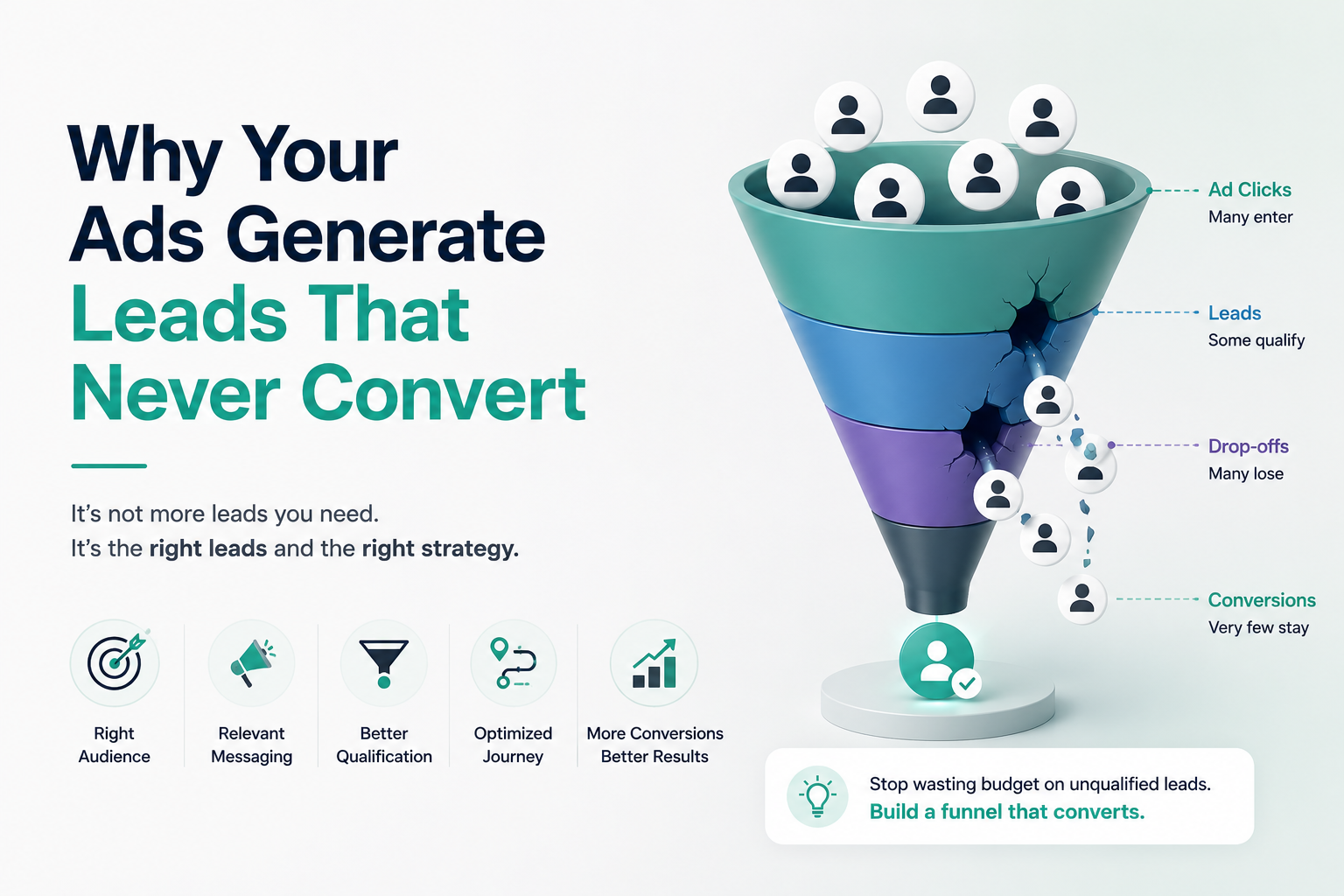
Why Your Ads Generate Leads That Never Convert
Performance Marketing
Technology buyers are sceptical, technical and comparison-driven. We build the credibility content and demand generation that turns an unknown vendor into a shortlisted one.
70%
of the B2B buying journey is complete before a vendor is contacted
Source: Gartner
6–10
stakeholders typically involved in an enterprise technology purchase
Source: Gartner
Comparison-led
evaluation and alternatives research is a standard stage in technology buying
Source: Category characteristic
Open five IT services websites and you will read the same sentences: end-to-end solutions, cutting-edge technology, client-centric approach, agile delivery. None of it differentiates, none of it is falsifiable, and none of it survives contact with a technical evaluator who is trying to work out whether you have actually solved their specific problem before.
Technology buyers are among the most sceptical in any market. They are frequently technical themselves, they research extensively, they compare openly, and they have been oversold to before. Marketing that works in this category is unusually concrete: specific problems, specific stacks, specific outcomes, and a willingness to say what you are not good at.
"We build software" competes with thousands of firms. "We migrate legacy .NET monoliths to containerised services for mid-size logistics companies" competes with almost none, and the buyer with that exact problem will recognise themselves instantly. Narrowing the claim feels like shrinking the market; in practice it is what makes you findable and memorable at all.
Technical buyers search error messages, architectural decisions, framework comparisons and "alternatives to" queries. Content that genuinely helps at that stage — including honest comparison and evaluation content — builds trust with exactly the people who will later run a procurement process. Being useful before the sale is the most reliable route into a shortlist.
A case study that says the client wanted to improve efficiency and we delivered a robust solution persuades nobody. One that names the constraint, the architecture, the tradeoffs considered, the migration approach and the measured result is evidence. Technical evaluators read for specifics, and vagueness reads as inexperience.
An enterprise technology decision involves technical evaluators, security review, procurement and a budget holder, each with different concerns. Marketing has to arm the internal champion with what they need to sell you internally — security documentation, architecture detail, references and commercial clarity — because most of the selling happens in rooms you are not in.
For B2B technology, the ability to target by job function, seniority, company size and technology stack makes LinkedIn expensive per click and frequently the cheapest per qualified opportunity. Combined with content that demonstrates genuine expertise, it is the most reliable demand generation channel in this sector.
Everyone claims end-to-end solutions and agile delivery, so nothing helps a buyer choose.
Buyers who are technical themselves and have been oversold to before, who discount marketing language entirely.
Success stories with no architecture, no constraints and no measured outcome, which read as having nothing to show.
Technical, security, procurement and finance stakeholders each needing different evidence to say yes.
Undifferentiated offshore positioning that collapses into hourly-rate comparison and erodes margin.
A specific problem, for a specific buyer, in a specific stack — narrow enough to be recognised and remembered.
Architecture write-ups, engineering posts and honest comparisons aimed at the people who evaluate you.
Constraints, decisions, tradeoffs and measured results, written to satisfy a technical reader.
Targeting by function, seniority, company size and stack — expensive per click, efficient per opportunity.
Security documentation, architecture detail and commercial clarity for the internal conversations you are not part of.
Measured on qualified opportunities and pipeline value rather than downloads, matched to your real sales cycle.
We listen, audit and research — understanding your market, audience and goals before anything else.
We craft a clear, measurable roadmap designed to hit the outcomes that matter to your business.
Our team builds, creates and launches with precision — pairing engineering rigour with bold creativity.
We measure, optimise and double down on what works to compound your growth over time.
We will push you to say what you are genuinely good at and what you are not, because that is what differentiates.
Content developed with your engineers, so it survives scrutiny from technical readers.
Measured on qualified opportunities and pipeline value, matched to your real sales cycle.
Positioning, content and website delivered together rather than handed between vendors.
Performance Marketing
Performance Marketing
Tell us your targets and we'll come back with a costed plan — channels, budget split and the cost per lead you should expect. No obligation.
Tell us about your goals. We'll engineer the path to get you there.