Related reading
Performance Marketing
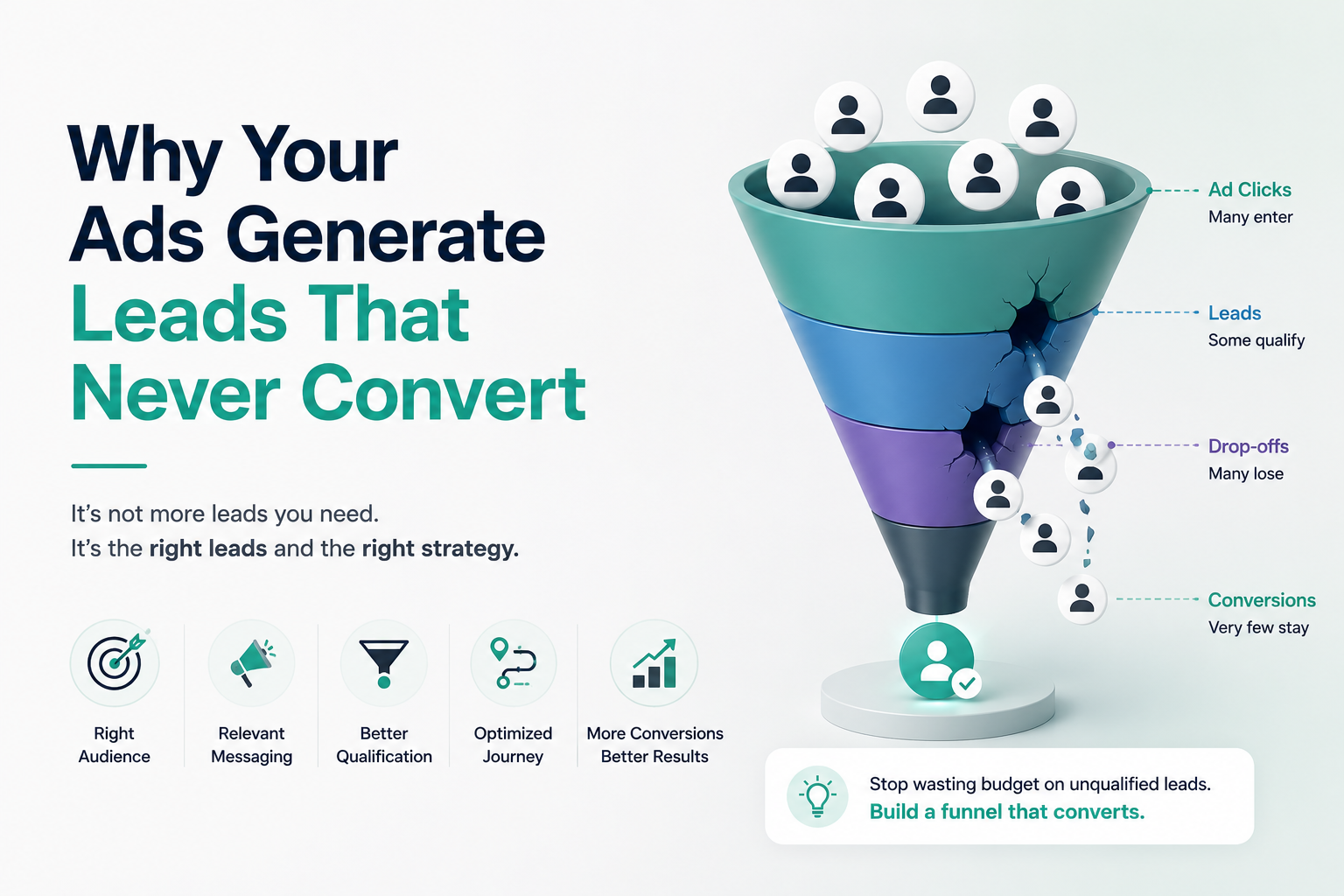
Why Your Ads Generate Leads That Never Convert
Performance Marketing
Healthcare marketing has to build trust and stay inside the rules. We grow appointment volume for hospitals, clinics and specialists with content that informs rather than claims.
5%
of all Google searches are health-related
Source: Google
Top 3
local map results capture the majority of local search clicks
Source: Local search industry studies
77%
of patients use online search before booking an appointment
Source: Google / Compete patient journey study
Patients choosing a hospital, clinic or specialist are making a decision with real consequences, usually under stress. They research symptoms, read reviews, compare doctors and look for reassurance that the people treating them are competent and honest. Marketing that shouts, exaggerates or promises outcomes does not just risk regulatory trouble — it actively undermines the trust the decision depends on.
We grow patient volume by making credible information easy to find and the path to an appointment frictionless, working within the advertising restrictions that apply to medical services in India.
People search for what is wrong with them long before they search for who can treat it. Content that answers those questions clearly and responsibly — what a condition is, when it warrants seeing someone, what a procedure involves, what recovery looks like — captures patients at the point they are forming an opinion about who is trustworthy. This is the highest-value content a healthcare provider can publish, and it must be medically reviewed.
For clinics and hospitals, the majority of valuable demand is geographically constrained. A properly maintained Google Business Profile, accurate location data, real reviews and location-specific pages routinely outperform far more expensive brand advertising, because they intercept people actively looking for care nearby, now.
Prospective patients read reviews carefully and weigh the responses as much as the ratings. A structured process to invite feedback from satisfied patients and to respond to criticism professionally — without ever disclosing patient information — materially changes conversion. This is an operational discipline, not a campaign.
Indian medical advertising rules, including the Drugs and Magic Remedies Act and medical council guidance, restrict claims about guaranteed outcomes, comparative superiority and certain treatments. Digital ad platforms apply their own additional restrictions to health categories. We build creative within those limits from the start rather than producing work that gets rejected or, worse, approved and later challenged.
Retargeting pixels and analytics on pages tied to specific conditions can expose sensitive health inferences about identifiable individuals. We configure tracking to avoid transmitting condition-level data alongside identifiers, and keep enquiry handling consistent with patient confidentiality expectations.
Patients form a view from reviews, doctor credentials and content quality long before they call, and most providers have no presence at that stage.
Medical advertising rules and platform health policies limit claims, so campaigns built like consumer ads get rejected or create liability.
Ratings and unanswered complaints dominate the first impression, with no process to invite feedback from satisfied patients.
Appointment paths that require a phone call during working hours lose patients who researched at 11pm.
Standard retargeting setups can leak condition-level inferences about identifiable people.
Condition, procedure and recovery content that answers real questions, reviewed by your clinicians before publication.
Accurate listings, location pages and review velocity that capture nearby, ready-to-book demand.
Systematic review invitations and professional, confidentiality-safe responses to criticism.
Credential-rich profiles that let a patient choose a specific clinician, which is how the decision is actually made.
Online appointment requests and click-to-WhatsApp so an enquiry can be made at any hour without a phone call.
Claims checked against Indian medical advertising rules and platform health policies before anything goes live.
We listen, audit and research — understanding your market, audience and goals before anything else.
We craft a clear, measurable roadmap designed to hit the outcomes that matter to your business.
Our team builds, creates and launches with precision — pairing engineering rigour with bold creativity.
We measure, optimise and double down on what works to compound your growth over time.
Compliance is part of the creative brief, so campaigns do not get pulled and claims do not create exposure.
Nothing medical publishes without your team signing off on accuracy.
Analytics configured so sensitive condition data is not transmitted alongside identifiers.
Reporting runs on booked and attended appointments, not impressions.
Performance Marketing
Performance Marketing
Tell us your targets and we'll come back with a costed plan — channels, budget split and the cost per lead you should expect. No obligation.
Tell us about your goals. We'll engineer the path to get you there.