Related reading
Performance Marketing
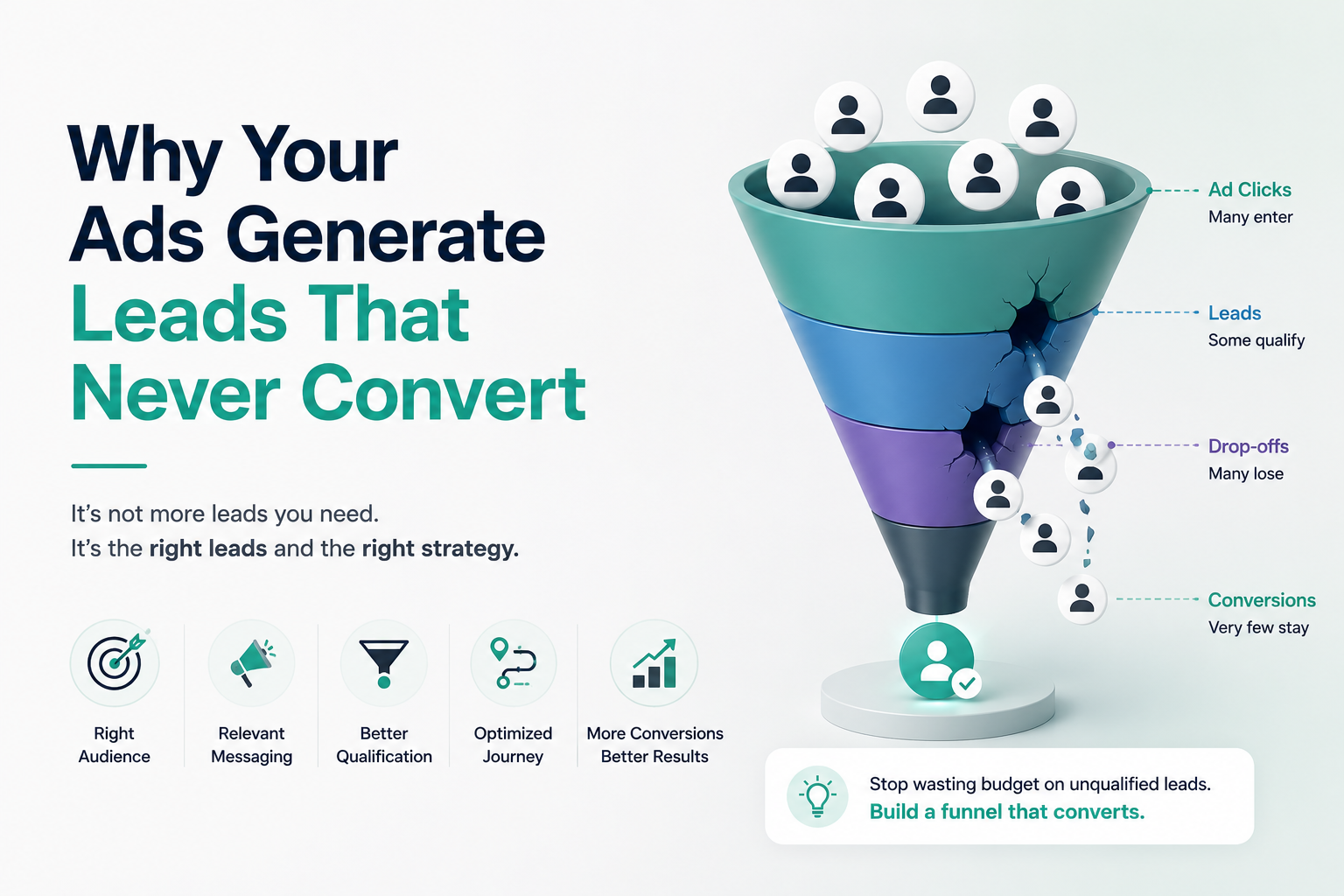
Why Your Ads Generate Leads That Never Convert
Performance Marketing
Admissions marketing is a deadline business. We build campaigns around the enrolment calendar and measure them on enrolled students, not enquiry forms.
Seasonal
admissions demand concentrates into a short annual window, making campaign timing decisive
Source: Category characteristic
2 audiences
student researches, parent typically funds and approves the decision
Source: Category characteristic
Long
consideration cycles spanning weeks to months across multiple decision-makers
Source: Category characteristic
Education marketing has an unusual shape. Demand is intensely seasonal, the person researching is frequently not the person paying, the consideration period is long, and the cost of a wasted admissions cycle is a full year of revenue that cannot be recovered. That combination punishes generic always-on marketing and rewards planning.
We build admissions campaigns backwards from the enrolment calendar — when applications open, when decisions are made, when fees are due — and measure on enrolled students rather than the enquiry volume that makes a monthly report look healthy.
For schools and most undergraduate programmes, the student researches and the parent pays. They want different things: students respond to campus life, peers, and what the experience feels like; parents want outcomes, safety, faculty credentials, fee structure and placement data. Content that tries to speak to both at once usually convinces neither. We produce for each explicitly, and route them to different pages.
Most institutions have no shortage of enquiries and a poor conversion rate to enrolment. The gap is almost always follow-up: how quickly someone responds, how many times they follow up before giving up, and whether the nurture between enquiry and admission deadline exists at all. Fixing this is usually more valuable than increasing ad spend.
Placement records, alumni outcomes, faculty credentials, board results and genuine student voices are far more persuasive than adjectives about excellence. Claims about outcomes should be specific and substantiated — vague superlatives are both unconvincing and, increasingly, a regulatory risk in the coaching sector, where advertising rules on success claims have tightened considerably.
Virtual tours, day-in-the-life films, faculty introductions and honest student interviews consistently outperform prospectus imagery. For families deciding remotely — especially out-of-state applicants — this content substitutes for a campus visit and materially raises application rates.
Forms fill up during admissions season while the enrolment rate stays flat, because nothing bridges enquiry and deadline.
Miss the admissions window and the revenue is gone for a full year — there is no catching up in the off-season.
Students want campus life, parents want outcomes and fees; content aimed at both usually persuades neither.
Every institution claims excellent faculty and placements, so nothing distinguishes one from another in the parent's mind.
Guidance on coaching and success-rate advertising has hardened, and unsubstantiated claims now carry real risk.
Budget and messaging phased to awareness, application and decision windows rather than spread evenly.
Distinct creative and landing pages, each answering the questions that audience actually has.
Automated and human follow-up sequences that keep a family engaged from first enquiry to fee payment.
Virtual tours, faculty introductions and honest student voices that raise applications from remote families.
Placement and results data presented specifically and defensibly, which persuades better and carries less risk.
Tracking through enquiry, application, admission and enrolment so you know which channels produce students, not just forms.
We listen, audit and research — understanding your market, audience and goals before anything else.
We craft a clear, measurable roadmap designed to hit the outcomes that matter to your business.
Our team builds, creates and launches with precision — pairing engineering rigour with bold creativity.
We measure, optimise and double down on what works to compound your growth over time.
Campaigns phased around your admissions cycle, because education budget spent at the wrong time is simply wasted.
Reporting follows the funnel through to enrolled students, which is the only number that matters.
Our team shoots the tours, faculty films and student interviews that drive applications.
Outcome messaging built to be substantiated, which protects you as advertising scrutiny in this sector increases.
Performance Marketing
Performance Marketing
Tell us your targets and we'll come back with a costed plan — channels, budget split and the cost per lead you should expect. No obligation.
Tell us about your goals. We'll engineer the path to get you there.